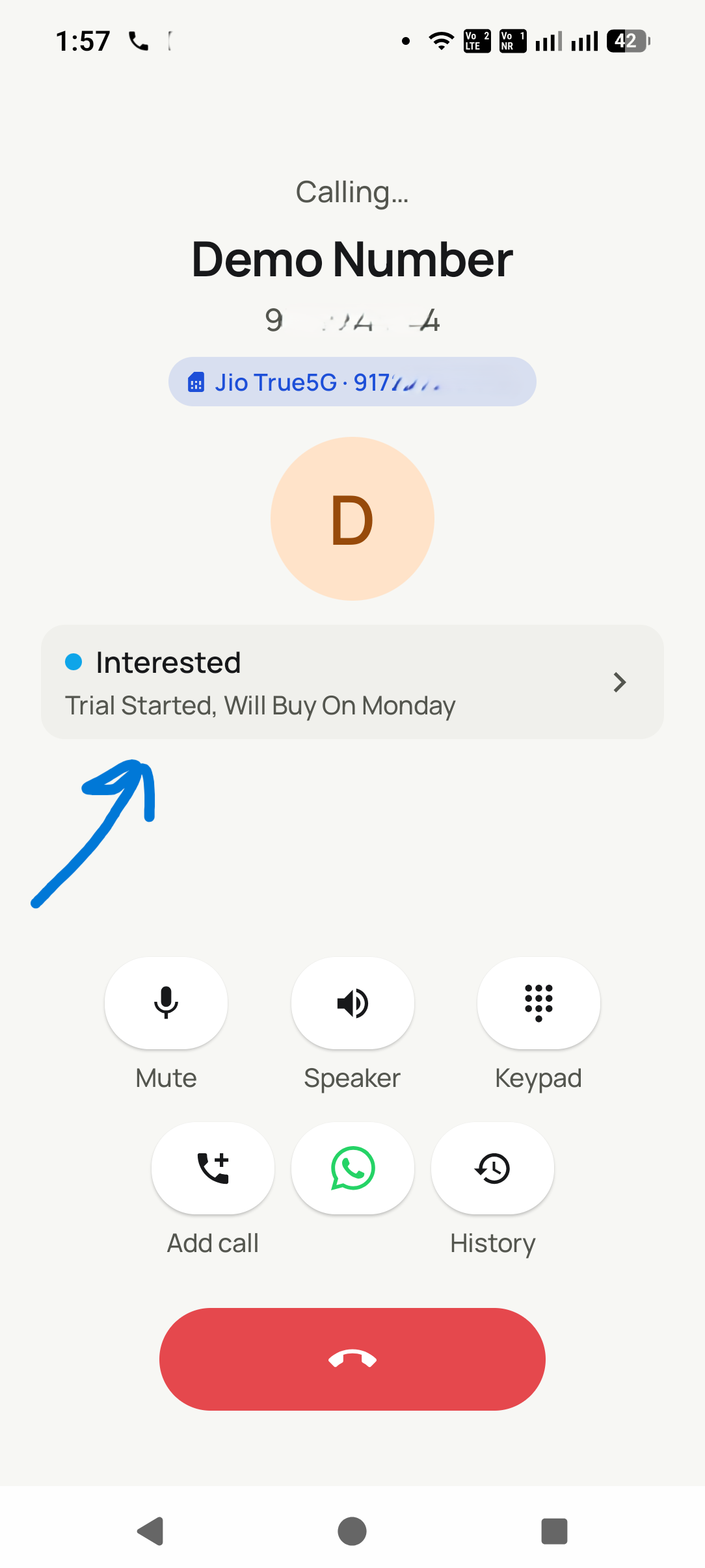
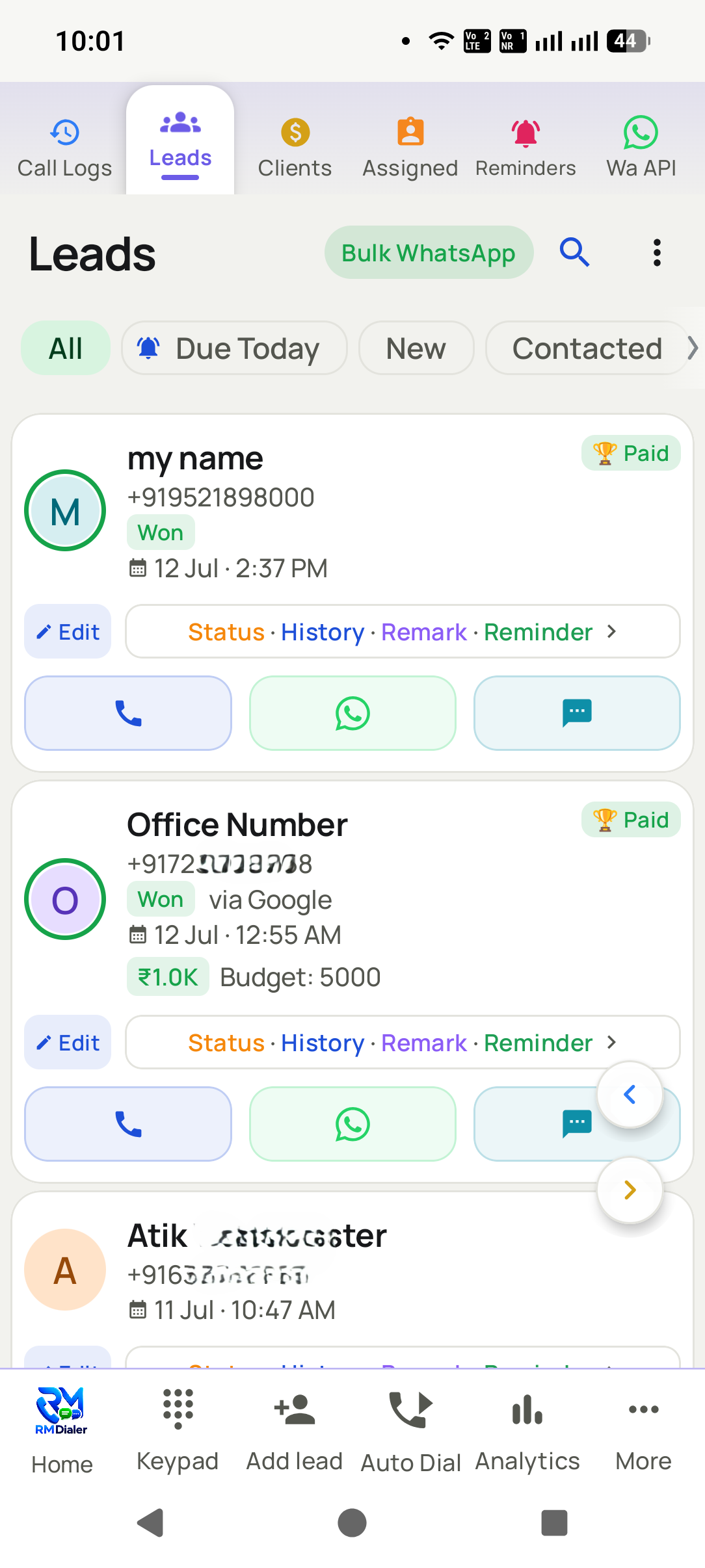
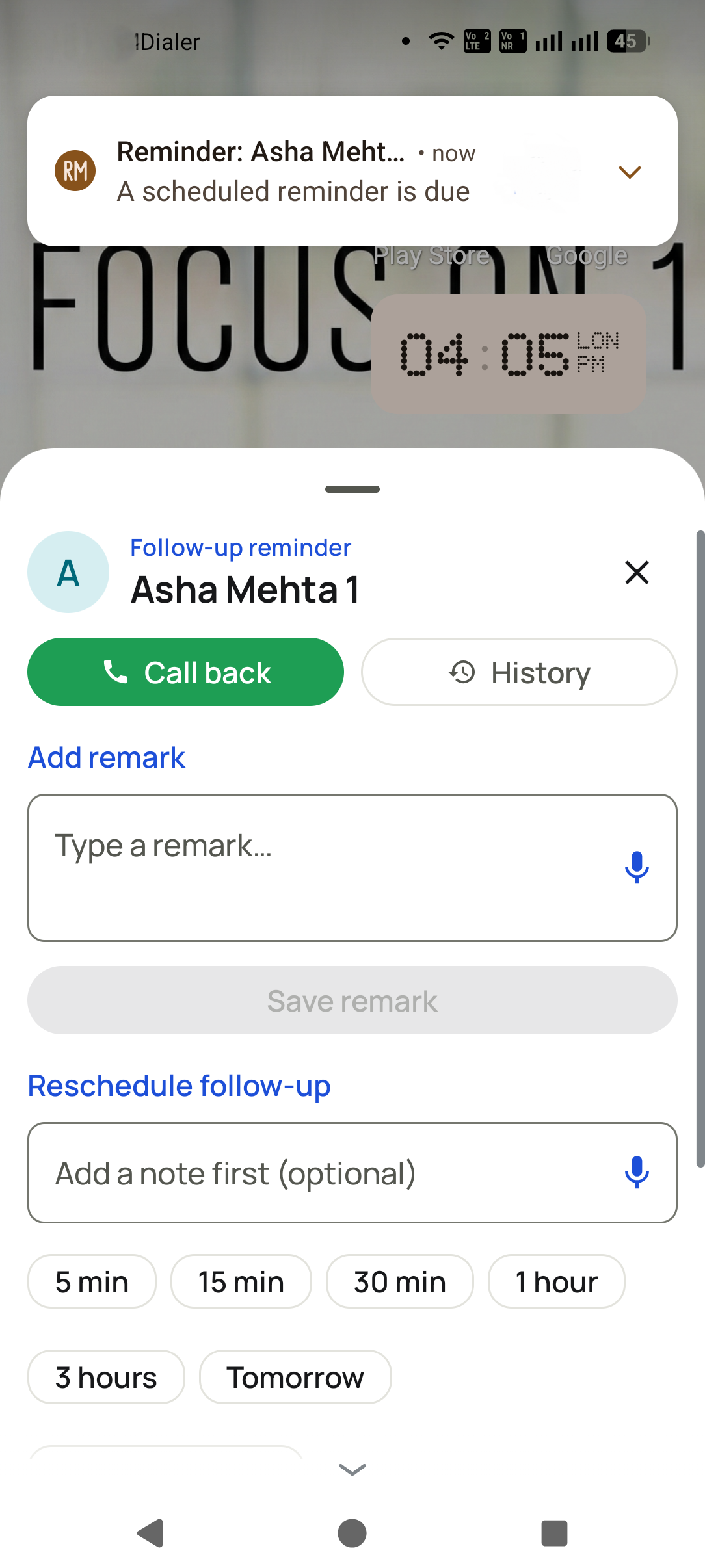
Numbers stop being numbers. Each caller carries their status, notes, products and full history — visible on the call screen itself, before the phone is even answered.
WasA diary, an Excel sheet and a memory that fails on Friday.
NowOne tap shows who they are and what was promised.
Works offline
Your own fields
No evening data entry
No second app
Caller ID from your own data
The CRM shows up before you say hello
Most CRMs are a website somebody updates afterwards, from memory, if they remember. This one is the caller ID: the moment the phone rings you already know who it is, what stage they are at, and the last thing you promised them.
01 You never answer blindName, lead status and your last remark are on the incoming call screen before you pick up — so you open with their name, not "who is this?".
02 Logging takes one tapWhen the call ends, the status, the note and the next follow-up are saved together in a single action, while it is still fresh.
03 Nothing to re-enter laterThere is no evening data-entry session, because the record was written while you were talking. The day ends when the calls end.
The difference
A CRM in a browser, or a CRM in the phone
Every calling team already owns a CRM somewhere. The problem is that it lives away from the phone, so it only knows what somebody remembered to type into it.
✕
CRM in a browser
✓
CRM inside the dialer
Someone types the call up afterwards, from memory
The record is written while the call happens
The phone has no idea who is ringing
Name and status show before you answer
Needs internet just to open a record
Works offline, syncs when the signal returns
Two apps: phone here, customer there
One app for the call and the customer
Follow-ups sit in a separate reminder tool
Reminders ring here, message already written
Data lives on the phone of whoever made the call
Everything syncs to the business account
The problem
What this actually fixes
Three things that cost you money today. Open any one to see what it is really costing.
01 PainThe phone rings and nobody knows who it isFixTheir name, status and last note are on the call screen before you pick up.+
What it costs · You pick up with no idea who it is, ask things they already told you, and sound like you forgot them. Because you did.
02 PainWhat was promised lives in someone’s headFixEvery call, note and status sits on the customer record, visible to whoever opens it.+
What it costs · When that person is on leave — or leaves — the customer history goes with them.
03 PainThe follow-up never happensFixReminders ring at the right time, with the WhatsApp message already written.+
What it costs · A hot lead goes cold because "call him Tuesday" was written on a diary page nobody opened on Tuesday. That is the easiest sale to lose.
How it looks
Three taps, start to finish
1
Step 1
See who is calling
Name, status and last note appear on the call screen.
2
Step 2
Log it in seconds
Set a status and a remark right after the call, not hours later.
3
Step 3
Never lose the thread
Reminders bring the customer back at the right time.
What you get
Everything in this pillar
Caller ID from your own customer records, shown live during the call
Lead statuses you define yourself, in the order you work them
Custom fields and tags — capture what your business actually needs
Remarks and a full timeline per customer: calls, status changes, edits
Reminders that carry a ready-to-send WhatsApp message
Import leads from Excel, CSV or a Google Sheet
App-wide search across calls, customers, notes and reminders
Fields suggest values you have typed before, so forms fill fast
Attach files and photos to a customer record
Mark buyers as paid clients, separate from open prospects
Works fully offline. Everything syncs once the signal is back
Automation
Automatic WhatsApp when a call ends
Set the rule once and the customer is messaged on their own — before the caller has even put the
phone down. No copying numbers, no switching apps, nothing to remember.
A call endsAnswered, missed or never connected — each can send its own message.
A status changesInterested, quoted, won: every stage can confirm itself.
A product is soldThe buyer gets the receipt, the details or the next step.